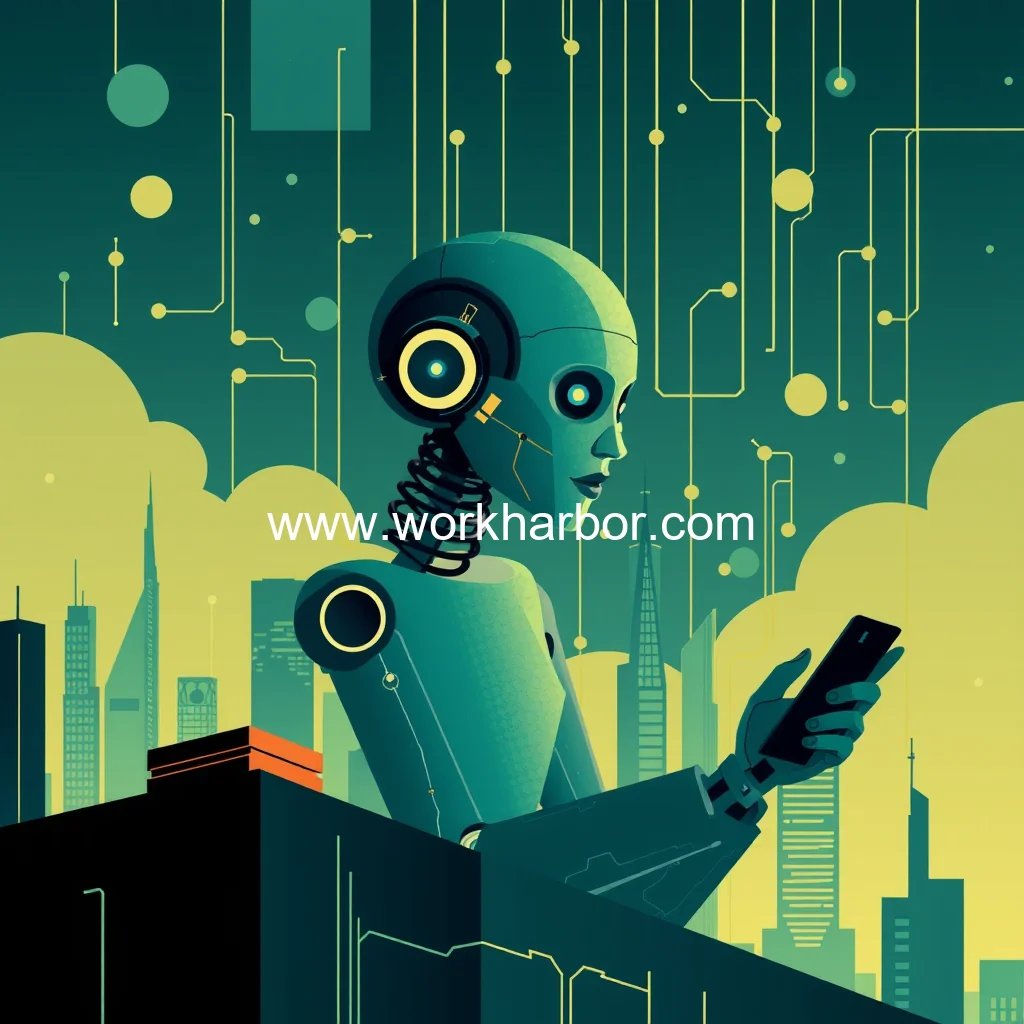
Job displacement on the rise as AI and automation transform industries.
As AI and automation continue to transform industries, it is essential to understand the implications of these changes on the workforce.
Understanding the Impact of AI and Automation on the Workforce
The increasing adoption of AI and automation technologies has led to significant job displacement in various sectors. According to a report by the McKinsey Global Institute, up to 800 million jobs could be lost worldwide due to automation by 2030. This staggering figure highlights the need for workers to develop new skills to remain relevant in the job market.
Key Industries Affected by AI and Automation
AI’s dual impact on the job market: creating efficiency and displacing workers.
However, the impact of AI on the job market is a topic of ongoing debate.
The Rise of AI in the Job Market
The increasing adoption of AI technologies has led to significant changes in the job market. While some argue that AI will create new job opportunities, others believe that it will exacerbate unemployment and widen the skills gap.
The Benefits of AI in the Job Market
The Challenges of AI in the Job Market
However, this shift has also led to a significant increase in the number of workers who are now classified as “gig economy” workers, with many struggling to access benefits and job security.
The Rise of the Gig Economy
The gig economy has experienced explosive growth in recent years, with the number of workers classified as gig economy workers increasing by over 20% in the past decade.
The Rise of Automation and AI in the Workplace
The increasing use of automation and AI in the workplace is transforming the nature of work and the types of jobs available. As AI systems become more sophisticated, they are taking over routine and repetitive tasks, freeing up human workers to focus on more complex and creative tasks. Key areas where AI is being applied: + Automated scheduling tools + Customer service bots + Data analysis and processing + Virtual assistants
The Impact on Remote Work
The rise of automation and AI is having a significant impact on remote work options. Many organizations are reducing the number of remote work options due to the increasing use of AI systems, which are directly reducing the demand for remote administrative and support roles. Examples of companies that have reduced remote work options: + Microsoft + IBM + Accenture
+ Productivity + Collaboration + Culture-building
The Future of Remote Work
While the rise of automation and AI is changing the nature of work, it is unlikely to completely eliminate remote work options.
This is particularly true for low-skilled and low-wage workers who are more vulnerable to job displacement.
The Skills Gap: A Growing Concern
The rapid advancement of AI and automation has created a significant skills gap in the workforce. This gap is characterized by a mismatch between the skills that workers possess and the skills required by employers to remain competitive in the AI-driven economy.
Key Factors Contributing to the Skills Gap
Leveraging Social Media for Reskilling and Job Search in the Digital Age.
The Rise of Online Reskilling Platforms
In recent years, the COVID-19 pandemic has accelerated the shift towards online learning and reskilling. As a result, social media platforms have become essential tools for workers to connect with potential employers and showcase their skills. LinkedIn and Twitter have emerged as popular platforms for laid-off workers to share their experiences, seek advice, and promote their services.
Key Features of Online Reskilling Platforms
Challenges Faced by Laid-Off Workers
Strategies for Success
The impact of automation and AI on the job market is a pressing concern.
The Impact of Automation and AI on the Job Market
The increasing use of automation and artificial intelligence (AI) in various industries has led to significant changes in the job market. While these technologies have the potential to improve efficiency and productivity, they also pose a threat to certain jobs, particularly those that involve repetitive tasks or can be easily automated.
The Rise of Automation
Automation has been on the rise for several decades, with the introduction of robots and machines that can perform tasks that were previously done by humans. However, the current wave of automation is more advanced and widespread than ever before. The use of AI and machine learning algorithms has enabled machines to learn from data and improve their performance over time. Examples of automated jobs include:
- Manufacturing and assembly line workers
- Customer service representatives
- Data entry clerks
- Bookkeeping and accounting clerks
- Job displacement: Automation replaces human workers in various industries, leading to job losses and unemployment. Skills obsolescence: As machines and algorithms take over routine and repetitive tasks, workers may find their skills becoming less relevant. Income inequality: The benefits of automation may not be evenly distributed, exacerbating income disparities between those who own the machines and those who do not. ### Opportunities*
- New job creation: Automation creates new job opportunities in fields such as AI development, deployment, and maintenance.
AI is transforming industries and the workforce.
The AI Landscape: A Complex and Evolving Field
The state of AI in 2023 is a complex and evolving field, with various stakeholders and organizations providing insights into its current state and future prospects. McKinsey, the Brookings Institution, and Harvard Business Review are among the prominent institutions that have published reports and articles on the topic.
McKinsey’s Perspective
McKinsey’s report, “The State of AI in 2023,” provides an in-depth analysis of the current AI landscape. The report highlights the growing adoption of AI across various industries, including healthcare, finance, and transportation.
On Preparing for an AI Economy
The Impact on Workers
The impact of automation on workers is a pressing concern. Many workers are concerned about the loss of their jobs due to automation, and the uncertainty surrounding the future of work is causing widespread anxiety. The competition for fewer roles is also contributing to the anxiety, as workers feel that they are not being considered for promotions or new job opportunities.
The Disproportionate Impact on Older Workers and Mid-Career Professionals
Older workers and mid-career professionals are disproportionately affected by the impact of automation on the job market.
The Future of Work: Navigating the Challenges of Automation
The world of work is undergoing a significant transformation, driven by the rapid advancement of automation and artificial intelligence. As machines and algorithms increasingly take over routine and repetitive tasks, workers must adapt to a new reality. The question is, how can individuals and organizations prepare for this shift and thrive in a world where work is no longer solely defined by human labor?
The Importance of Continuous Education
In today’s fast-paced and rapidly changing job market, continuous education and skills development are essential for workers to remain relevant. The ability to learn new skills and adapt to new technologies is crucial for individuals to stay ahead of the curve.
As automation replaces certain jobs, it creates new ones, and the nature of work is changing.
The Impact of AI and Automation on Labor Markets
Challenges
AI and automation pose significant challenges for labor markets. Some of the key concerns include:
Opportunities
Despite the challenges, AI and automation also present opportunities for labor markets. Some of the key benefits include: