However, the sector faces numerous challenges, including the need for improved infrastructure, inadequate labor laws, and the threat of piracy.
The Challenges Facing the Maritime Industry
The maritime industry is plagued by several challenges that hinder its growth and development. Some of the key issues include:
The Role of the Government
The government plays a crucial role in addressing the challenges facing the maritime industry.
The impacts of climate change are being felt across the country, from the loss of fisheries to the degradation of freshwater resources.
The Effects of Climate Change on Ghana’s Maritime Landscape
Rising Sea Levels and Coastal Erosion
Ghana’s coastline is particularly vulnerable to the effects of rising sea levels and coastal erosion. The country’s low-lying coastal areas are experiencing increased flooding, saltwater intrusion into freshwater sources, and erosion of beaches and dunes. For example, the coastal town of Ada, which is a major fishing community, is experiencing frequent flooding due to the rising sea levels. The town’s residents are struggling to adapt to the changing environment, with many forced to relocate to higher ground. The Ghanaian government has recognized the need to address the impacts of climate change on the country’s maritime landscape. In 2019, the government launched the National Adaptation Programme, which aims to reduce the country’s vulnerability to climate change. The programme includes measures to protect coastal communities, restore natural habitats, and promote sustainable livelihoods.*
Extreme Weather Events
Ghana is experiencing an increase in extreme weather events, including hurricanes, cyclones, and droughts. These events are having a significant impact on the country’s agriculture, fisheries, and infrastructure. For example, the 2017 hurricane season brought severe flooding to the country, causing widespread damage to crops and infrastructure. The impacts of extreme weather events are being felt across the country, from the loss of fisheries to the degradation of freshwater resources.
The Challenges of Decarbonisation
Decarbonisation in the maritime industry is a complex and multifaceted challenge. It requires significant investment in new technologies, infrastructure, and operational practices. The IMO has set a target of reducing emissions from shipping by at least 50% by 2050, which is a challenging task given the industry’s reliance on fossil fuels.
Ghana’s maritime industry relies heavily on fossil fuels, stifling growth and contributing to environmental concerns.
Understanding the Maritime Industry in Ghana
The maritime industry plays a vital role in Ghana’s economy, with the country’s coastline providing access to major markets and resources. The industry is dominated by small and medium-sized enterprises (SMEs), which account for approximately 90% of the sector’s vessels. However, the sector’s growth is largely dependent on fossil fuels, which contribute significantly to greenhouse gas emissions. Key statistics:
- • The maritime industry accounts for approximately 3% of Ghana’s GDP.
The Imperative of Climate Adaptation
Ghana’s climate is projected to become increasingly unstable, with rising temperatures and changing precipitation patterns expected to have devastating impacts on the country’s agriculture, water resources, and coastal ecosystems. The country’s vulnerability to climate change is exacerbated by its geographical location, with the majority of its population living in low-lying coastal areas and relying heavily on agriculture for food security. The projected impacts of climate change on Ghana’s agriculture sector are particularly concerning, with rising temperatures and changing precipitation patterns expected to reduce crop yields and increase the risk of crop failures. The country’s water resources are also under threat, with changes in precipitation patterns and increased evaporation due to warmer temperatures expected to reduce the availability of freshwater.
In response to these challenges, the Ghanaian government has launched a comprehensive maritime sector development plan. This plan aims to strengthen the sector’s resilience to climate change and improve its sustainability. Key components of the plan include measures to enhance the capacity of the sector’s institutions and infrastructure, increase the use of renewable energy, and promote eco-friendly maritime practices. The maritime industry in Ghana is a significant contributor to the country’s economy, with a substantial share of the country’s trade and commerce taking place by sea. The sector employs a large number of people and supports the livelihoods of many communities along the coast. However, the industry’s growth and development are being hindered by the impacts of climate change. Rising sea levels and more frequent flooding are threatening the country’s coastal infrastructure, including ports and other critical facilities. The increased intensity of storms is also putting pressure on maritime operations, with vessels and cargo being damaged or lost.
Coastal erosion poses significant economic challenges for Ghana, threatening the country’s economic stability and development.
The Impact of Coastal Erosion on Ghana’s Economy
Coastal erosion poses significant economic challenges for Ghana, particularly in the western coastal region. The loss of shoreline and land loss can lead to:
- Increased costs for port infrastructure maintenance and repair
- Loss of agricultural land and fisheries resources
- Displacement of local communities and increased vulnerability to natural disasters
- Negative impacts on tourism and other industries that rely on the coastline
- Disruption to supply chains and trade
- Loss of life and livelihoods
- Negative impacts on the environment and ecosystems
- Improved propulsion systems
- Enhanced hull designs
- Advanced wind-assisted propulsion systems
- Energy-efficient propulsion systems
- Reduced carbon emissions
- Lower energy costs
- Increased energy independence
- Improved air quality
- Using solar panels to power lighting and ventilation systems
- Using solar panels to charge batteries for backup power during periods of low sunlight
- Using solar panels to generate electricity for port operations
- 30% reduction in greenhouse gas emissions
- 20% reduction in carbon dioxide emissions
- 15% reduction in nitrogen oxide emissions
- Reduced greenhouse gas emissions
- Improved air quality
- Enhanced energy efficiency
- Increased competitiveness
- Job creation and economic growth
- Tax incentives for green shipping companies
- Subsidies for sustainable infrastructure projects
- Regulations to reduce emissions
- Investment in research and development of new technologies
- Share knowledge and expertise
- Develop and implement effective policies
- Invest in sustainable infrastructure
- Promote sustainable practices among stakeholders
- Investing in alternative fuels
- Developing more efficient propulsion systems
- Implementing energy-efficient technologies
- Enhancing digitalization and data analytics
- Damage to vessels and equipment
- Disruption to supply chains
- Increased costs for maintenance and repairs
- Investing in green shipping infrastructure, such as wind farms and solar panels, can reduce emissions and create new economic opportunities
- Ghana’s strategic location on the West African coast makes it an ideal hub for green shipping routes
- Upgrading its drainage systems to reduce flooding
- Implementing flood-control measures, such as seawalls and dunes
- Enhancing its emergency preparedness and response plans
- Decreased cargo handling capacity due to flooding and damage to infrastructure
- Increased costs for the GPHA due to the need for repairs and maintenance
- Potential losses to the economy as a whole, including impacts on trade and commerce
- Marine Conservation: The department conducts research on the conservation of marine ecosystems, including coral reefs, mangroves, and seagrasses. Fisheries Management: The department conducts research on the management of fisheries resources, including the development of sustainable fishing practices and the conservation of fish populations. Sustainable Development: The department conducts research on the sustainable development of the marine and fisheries sector, including the impact of climate change on marine ecosystems and the development of sustainable livelihoods for coastal communities. ### Teaching and Community Engagement**
For instance, the port of Takoradi, a major economic hub in the region, is at risk of being rendered obsolete due to the rapid erosion of its shoreline. The port’s infrastructure, including its warehouses and storage facilities, is already showing signs of damage and deterioration.
The Role of Human Activities in Exacerbating Coastal Erosion
Human activities such as sand mining, construction, and coastal development are major contributors to coastal erosion in Ghana.
The cocoa industry is a significant contributor to Ghana’s economy, with cocoa beans being the main export commodity. The impact of flooding on the cocoa industry can be severe, resulting in significant losses for farmers and the economy as a whole.
Understanding the Impact of Flooding on the Cocoa Industry
The cocoa industry is a vital sector in Ghana’s economy, with cocoa beans being the main export commodity. The industry is highly dependent on the timely delivery of perishable goods, including cocoa beans, to meet global demand. Heavy rainfall during the rainy season can cause localized flooding, which can disrupt the supply chain and have a significant impact on the industry. Key factors contributing to the impact of flooding on the cocoa industry: + Disruption of supply chains + Damage to cocoa farms and processing facilities + Loss of perishable goods + Economic losses for farmers and the industry as a whole
The Economic Impact of Flooding on the Cocoa Industry
The economic impact of flooding on the cocoa industry can be severe. The industry is highly dependent on the timely delivery of cocoa beans to meet global demand. Disruptions to the supply chain can result in significant losses for farmers and the industry as a whole.
As a result, Ghana’s maritime industry is poised to play a crucial role in the transition to a low-carbon economy.
The Challenges of Climate Change
Climate change poses significant risks to Ghana’s maritime industry. Rising sea levels, more frequent natural disasters, and increased storm intensity are just a few of the challenges that the industry faces. The impact of climate change on the maritime industry is multifaceted, affecting not only the vessels themselves but also the ports, terminals, and other infrastructure that support the industry. Increased costs associated with damage to vessels and infrastructure
The Opportunities of Green Shipping
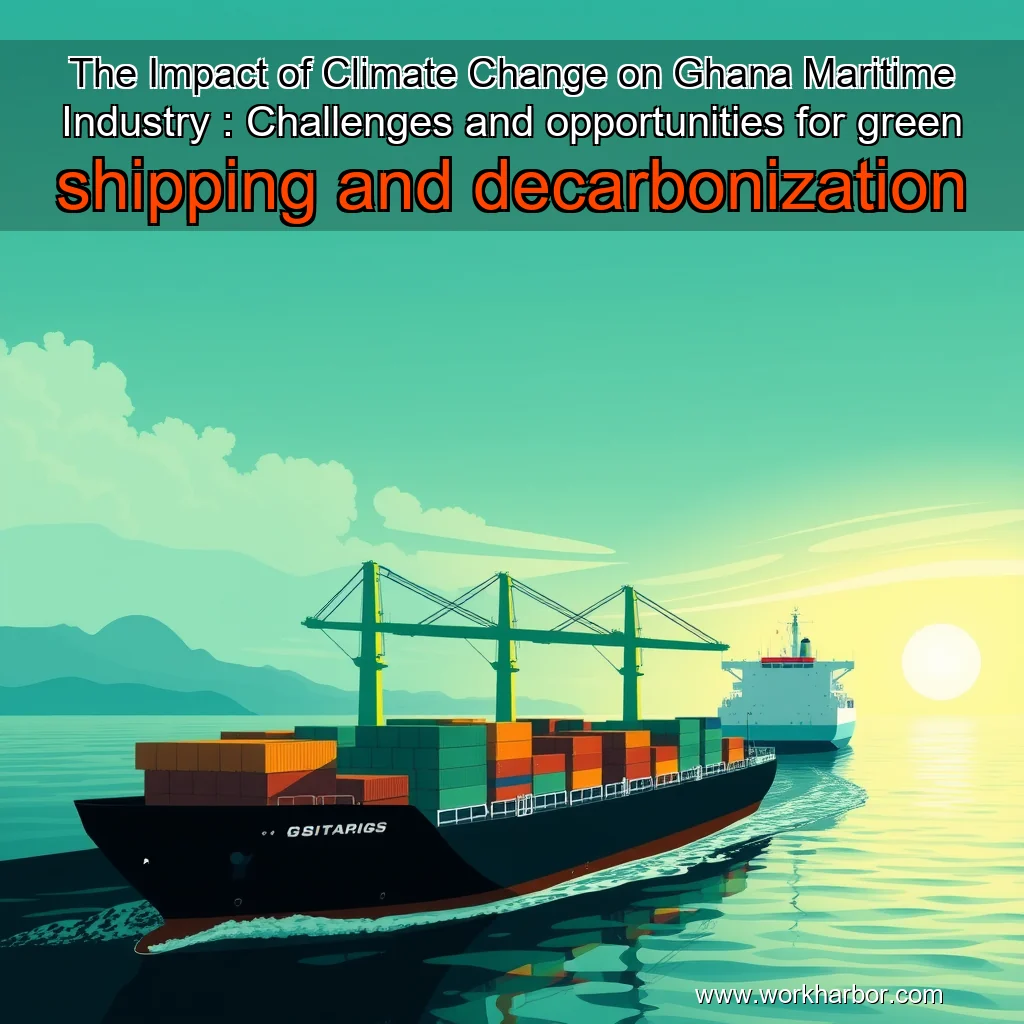
On the other hand, Ghana’s maritime industry is also at the forefront of a vital transition toward green shipping and decarbonisation.
The Challenge of Reducing Emissions from International Shipping
International shipping is a significant contributor to greenhouse gas emissions, accounting for around 2.2% of global emissions. The International Maritime Organization (IMO) has set a target to reduce these emissions by at least 50% by 2050. This goal is ambitious, but it is essential for mitigating the impacts of climate change. Ghana, as a major shipping hub, must take proactive steps to achieve this target.
The Role of Alternative Fuels
Alternative fuels, such as liquefied natural gas (LNG), hydrogen, and biofuels, can significantly reduce emissions from shipping operations. These fuels offer a cleaner alternative to traditional fossil fuels, which are the primary source of emissions from shipping. The use of alternative fuels can reduce carbon dioxide emissions by up to 90% compared to traditional fuels. Key benefits of alternative fuels: + Reduced carbon dioxide emissions + Lower sulfur oxide emissions + Improved air quality + Enhanced energy security
Technological Advancements in Energy Efficiency
Technological advancements in energy efficiency can also play a crucial role in reducing emissions from shipping. These advancements include:
These technological advancements can reduce energy consumption and emissions from shipping operations. For example, a study by the International Chamber of Shipping found that the use of advanced propulsion systems can reduce energy consumption by up to 20%.
The Importance of Energy Efficiency in Ghana
Ghana’s shipping industry is a significant contributor to the country’s economy. The introduction of alternative fuels and technological advancements in energy efficiency will be critical for reducing emissions from shipping operations.
The Maritime Industry’s Carbon Footprint
The maritime industry is one of the largest contributors to global greenhouse gas emissions, accounting for around 2.2% of global CO2 emissions. This is largely due to the use of fossil fuels, which release CO2 into the atmosphere.
The port has installed solar panels on its warehouses and port buildings, reducing its carbon footprint and energy costs.
The Benefits of Solar Energy for the Port of Rotterdam
The Port of Rotterdam has been a pioneer in adopting renewable energy solutions, and its experience with solar energy is a prime example of the benefits it can offer. By harnessing the power of the sun, the port has been able to reduce its reliance on fossil fuels and lower its carbon emissions. Key benefits of solar energy for the Port of Rotterdam include:
How Solar Energy Can Help Meet Energy Demands
Installing solar panels on port buildings and warehouses can help meet some of the energy demands of the port. This can be achieved through a variety of methods, including:
The Impact of Solar Energy on the Port’s Carbon Footprint
The Port of Rotterdam’s adoption of solar energy has had a significant impact on its carbon footprint. By reducing its reliance on fossil fuels, the port has been able to lower its greenhouse gas emissions and contribute to a cleaner environment. Key statistics on the Port of Rotterdam’s carbon footprint reduction:
Case Study: The Port of Rotterdam’s Solar Energy Initiative
The Port of Rotterdam’s solar energy initiative is a prime example of how a port can adopt renewable energy solutions to reduce its environmental impact.
Transitioning to a Sustainable Maritime Industry Requires Collaboration and Innovation.
The Need for a Sustainable Maritime Industry
The maritime industry is one of the largest contributors to greenhouse gas emissions, accounting for around 2.5% of global emissions. As the world grapples with the challenges of climate change, it is imperative that the maritime industry plays a significant role in reducing its carbon footprint. However, the industry’s reliance on fossil fuels and lack of investment in sustainable technologies make it a significant contributor to emissions.
The Benefits of a Sustainable Maritime Industry
A sustainable maritime industry can have numerous benefits, including:
Policy Tools for a Sustainable Maritime Industry
Several policy tools can facilitate the transition to a sustainable maritime industry. These include:
Collaboration and Coordination
Government, port authorities, shipping companies, and local communities must work together to build a sustainable, climate-resilient maritime industry. This collaboration can help to:
The Role of Technology
Technology can play a crucial role in reducing the maritime industry’s carbon footprint. This includes:
The Way Forward
Building a sustainable, climate-resilient maritime industry requires a coordinated effort from all stakeholders.
The Importance of International Partnerships
Ghana’s climate change challenges are multifaceted and require a comprehensive approach. The country’s reliance on fossil fuels, deforestation, and agricultural practices contribute to its high greenhouse gas emissions.
The Challenges Facing Ghana’s Maritime Industry
Ghana’s maritime industry is facing significant challenges, primarily driven by climate change. Rising sea levels and extreme weather events are causing damage to ports, vessels, and infrastructure, making it difficult for the sector to operate efficiently. Increased risk of flooding and erosion
The sector is also struggling with outdated infrastructure, which is hindering its ability to adapt to changing environmental conditions. The lack of investment in modernization and upgrading of existing facilities is exacerbating the problem.
The Opportunities for Green Shipping
On the other hand, the global push for decarbonisation presents a significant opportunity for Ghana to position itself as a leader in green shipping in Africa. The sector has the potential to play a crucial role in reducing greenhouse gas emissions and mitigating the impacts of climate change. Green shipping fuels, such as liquefied natural gas (LNG) and hydrogen, offer a cleaner alternative to traditional fossil fuels
The Path Forward
To address the challenges facing the maritime industry and capitalize on the opportunities for green shipping, Ghana needs to take a multi-faceted approach.
Introduction
The Ghana Ports and Harbours Authority (GPHA) has released its annual report for the year 2020, providing valuable insights into the state of Ghana’s ports and harbours. The report highlights the challenges faced by the sector, including the impact of climate change on African coastal infrastructure. In this article, we will delve into the key findings of the report and explore the implications of climate change on Ghana’s ports and harbours.
Climate Change and its Impact on African Coastal Infrastructure
Climate change is having a profound impact on African coastal infrastructure, including Ghana’s ports and harbours. Rising sea levels, increased storm frequency, and more frequent flooding are just a few of the challenges that the sector is facing. According to the report, the GPHA has experienced increased flooding at its ports, particularly during the 2020 monsoon season. The report highlights the need for the GPHA to invest in climate-resilient infrastructure to mitigate the impacts of climate change. The authority has identified several areas where it can improve its resilience, including:*
Economic Implications
The impact of climate change on Ghana’s ports and harbours has significant economic implications. The report highlights the potential losses to the sector, including:
Conclusion
The annual report of the GPHA provides valuable insights into the challenges faced by Ghana’s ports and harbours.
Introduction
The University of Ghana, Department of Marine and Fisheries Sciences is a leading institution in the field of marine and fisheries sciences in West Africa. Located in Accra, Ghana, the department is renowned for its research, teaching, and community engagement in the areas of marine and fisheries management, conservation, and sustainable development.
Mission and Vision
The department’s mission is to contribute to the sustainable development of the marine and fisheries sector in Ghana and the region through research, education, and community engagement. The department’s vision is to be a leading center of excellence in marine and fisheries sciences, recognized for its innovative research, high-quality education, and effective community engagement.
Research Focus
The department’s research focus is on several key areas, including:
Teaching and Community Engagement
The department offers undergraduate and graduate programs in marine and fisheries sciences, including a Bachelor of Science in Marine and Fisheries Sciences and a Master of Science in Marine and Fisheries Sciences.