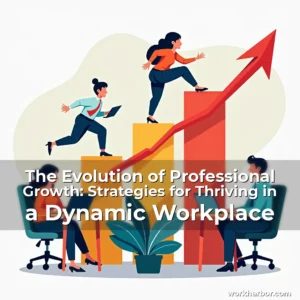
The Journey of Professional Growth: Strategies, Challenges, and Real-World Impact
In today’s fast-paced world, professional growth is not merely an aspiration but a necessity. It involves continuous learning, adapting to new challenges, and evolving within your career path. Whether you’re climbing the corporate ladder or exploring new opportunities, understanding how to navigate this journey can significantly impact your success.
Professional development encompasses various aspects—from skill acquisition to networking and personal branding. Embracing these elements can open doors to better roles, higher salaries, and greater job satisfaction. Let’s explore what it truly means to grow professionally and how you can harness its benefits effectively.
Understanding the Foundations of Professional Growth
At its core, professional growth is about enhancing your skills, knowledge, and abilities to perform better in your current role and prepare for future opportunities. This process begins with self-assessment—understanding where you stand in terms of expertise, strengths, and areas needing improvement.
Identifying gaps in your competencies allows you to create targeted plans for advancement. These could include formal education, certifications, workshops, or even informal mentorship programs that provide real-world insights from experienced professionals.
- Skill Assessment: Regularly evaluating which skills are critical for your current position helps align your development goals with organizational needs.
- Lifelong Learning: Staying updated with industry trends through books, online courses, webinars, and conferences ensures you remain competitive in a rapidly changing job market.
Growth also extends beyond technical skills; soft skills such as communication, leadership, and emotional intelligence play crucial roles in career progression. Developing these interpersonal capabilities enhances teamwork effectiveness and opens pathways to managerial positions.
Cultivating a Mindset for Continuous Improvement
A proactive approach towards professional development starts with cultivating the right mindset. Being open to feedback, embracing change, and viewing setbacks as learning opportunities are essential traits of someone committed to ongoing improvement.
This mindset enables individuals to seek out mentors who can guide them through complex situations while encouraging experimentation with innovative ideas without fear of failure. Such attitudes foster resilience against common obstacles faced during career transitions.
Maintaining curiosity and asking questions consistently keeps employees engaged with their work environment. Engaged workers tend to contribute more creatively, leading to enhanced productivity levels across teams.
Strategies for Effective Skill Development
Creating structured plans around skill enhancement increases the likelihood of achieving long-term career objectives. Setting SMART (Specific, Measurable, Achievable, Relevant, Time-bound) goals provides clear direction when pursuing new qualifications or projects.
Engaging in cross-functional training exposes employees to different departments’ operations, broadening perspectives and improving adaptability. This exposure often leads to identifying transferable skills applicable in varied contexts.
Hands-on experience remains invaluable despite theoretical knowledge gained via academic routes. Seeking internships, volunteering opportunities, or side projects complements classroom learning by applying concepts practically under diverse conditions.
Collaborating with peers through study groups or collaborative platforms fosters mutual support systems where members share resources, discuss case studies, and learn from each other’s experiences. Peer-to-peer teaching strengthens foundational understandings before tackling advanced topics independently.
Building Your Personal Brand and Network
Your personal brand reflects who you are professionally and influences perceptions among colleagues, employers, and clients alike. Establishing credibility requires consistency between online profiles and offline behaviors, ensuring alignment with desired career aspirations.
Actively participating in industry events, joining relevant associations, and contributing thought leadership articles help build visibility within niche communities. Networking strategically—not just quantity matters but quality connections made intentionally towards shared interests or goals.
Online presence management includes optimizing LinkedIn profiles with keywords related to target industries plus showcasing achievements prominently so potential recruiters easily recognize value propositions upon scanning profiles quickly.
Networking Beyond Traditional Boundaries
Modern professionals increasingly leverage digital tools like Twitter/X spaces, virtual meetups, podcasts interviews, etc., expanding reach globally irrespective of geographical constraints previously limiting interaction circles significantly.
These virtual interactions allow exchanging ideas freely across cultures and sectors, fostering innovation inspired by multicultural viewpoints rather than localized approaches alone. Such diversity enriches problem-solving techniques used daily at workplaces worldwide.
Digital engagement doesn’t replace face-to-face meetings entirely but serves as supplementary channels maintaining relationships sustainably over time especially amidst global uncertainties affecting travel feasibility frequently nowadays.
Navigating Obstacles Alongside Career Advancement Paths
Despite best efforts toward progress, several hurdles may impede smooth transitions along chosen trajectories. Common issues range from lack of motivation due to burnout symptoms arising from excessive workload pressures up until internal conflicts regarding ethical dilemmas encountered regularly while working diligently toward promotion targets.
To overcome these barriers effectively, recognizing early warning signs becomes vital. Implementing regular check-ins with supervisors discussing concerns openly creates safe spaces expressing doubts candidly instead suppressing feelings potentially causing larger problems later down lines.
Developing coping mechanisms tailored specifically addressing stressors identified individually proves highly beneficial. Techniques vary widely depending upon nature severity including meditation practices, physical exercises routines designed relaxing minds efficiently post stressful days.
Moreover, seeking guidance from HR departments whenever facing discrimination allegations or harassment incidents promptly prevents escalation risks negatively impacting mental health states adversely thereby hindering further developments otherwise achievable had timely interventions occurred earlier stages.
Measuring Progress Toward Long-Term Objectives
Evaluating milestones achieved periodically reassures whether adopted strategies yield expected results or necessitate adjustments mid-journey based upon observed outcomes thus far. Utilizing performance reviews offered annually acts conveniently benchmarking improvements realized since last assessments conducted similarly.
Setting aside dedicated times weekly/monthly reviewing set KPIs (Key Performance Indicators) alongside comparing actual accomplishments against projected timelines maintains accountability towards commitments made publicly or privately regardless circumstances encountered along ways forward.
Keeping track of both quantitative metrics tied directly measurable outputs generated versus qualitative feedback received indirectly reflecting overall influence exerted professionally helps gauge holistic impacts accurately assessing true worth contributions made consistently overtime periods measured objectively.
Fostering Resilience Through Diverse Experiences
Varying responsibilities assigned gradually introduces fresh challenges pushing boundaries comfortably extending comfort zones safely allowing incremental yet meaningful enhancements occurring naturally without sudden shocks disrupting equilibrium established previously.
Pursuing assignments requiring unfamiliar methodologies compels acquiring novel competencies rapidly accelerating adaptation speeds necessary surviving turbulence inevitable wherever innovation thrives continuously evolving environments prevalent modern economies predominantly driven technological advancements perpetually reshaping landscapes constantly.
Exposure to multidisciplinary projects cultivates versatile mindsets appreciating interconnectedness linking disparate fields together revealing synergistic possibilities previously unconsidered widening horizons dramatically influencing future decision makings substantially altering directions taken subsequently afterwards.
Broadened experiences instill confidence tackling unknown territories confidently knowing underlying principles adaptable flexibly according to situational requirements ensuring successful navigation unpredictable scenarios encountered unexpectedly sometimes posing significant threats potentially jeopardizing entire initiatives launched hastily without sufficient preparation beforehand.
Embracing Feedback Culturally
Constructive criticism functions as fuel propelling individuals upwards provided approached receptively instead defensively resisting inputs perceived threatening ego integrity unnecessarily risking missing golden chances growing exponentially faster rates otherwise attainable solely relying instinctual judgments devoid external validation sources absent entirely.
Establishing cultures valuing transparency encourages free flow exchanges promoting trust strengthening bonds formed collaboratively creating ecosystems thriving mutually supportive atmospheres conducive optimal performances emerging spontaneously organically stemming intrinsic motivations aligned collective missions pursued relentlessly passionately.
Regular peer evaluations complement traditional hierarchical appraisals offering balanced views capturing nuanced realities seldom captured singular perspectives alone resulting comprehensive portraits enabling precise calibration tuning fine details optimally maximizing efficiencies minimizing redundancies eliminating waste systematically organizing workflows streamlining processes visibly improving bottom lines positively impacting organizational bottomlines notably increasing profit margins considerably.
Feedback loops integrated seamlessly within daily operations ensure continual refinement maintaining high standards excellence persistently striving surpass previous benchmarks consistently exceeding expectations repeatedly setting new records continuously innovating ceaselessly challenging status quo bravely redefining norms daringly venturing outside conventional wisdom accepted traditionally without question ever.
Conclusion
Professional growth is a dynamic journey marked by continuous learning, strategic planning, and personal development. By understanding its foundations, cultivating the right mindset, and implementing effective strategies, individuals can achieve remarkable career advancements.
Whether through building networks, overcoming obstacles, measuring progress, or embracing feedback, every step contributes to a fulfilling professional life. Committing to lifelong learning and staying resilient ensures sustained success and fulfillment in any career path chosen wisely thoughtfully planned meticulously executed thoroughly evaluated periodically refined continually optimized endlessly improved forever renewed freshly invigorated always ready迎接新的挑战!