Maritime Industry Faces Multiple Challenges, Requires Collaborative Efforts to Overcome Them.
However, the sector faces numerous challenges, including inadequate infrastructure, corruption, and a lack of skilled labor.
The Challenges Facing the Maritime Industry
The maritime industry is plagued by several challenges that hinder its growth and development. Some of the key issues include:
The Role of the Government
The government plays a crucial role in addressing the challenges facing the maritime industry. Some of the measures that can be taken include:
The Importance of Private Sector Involvement
Private sector involvement is essential in addressing the challenges facing the maritime industry. Some of the ways in which private sector companies can contribute include:
The impacts of climate change are being felt across the country, from the loss of fisheries to the degradation of freshwater resources.
The Effects of Climate Change on Ghana’s Maritime Industry
Climate change is having a profound impact on Ghana’s maritime industry, affecting not only the country’s economy but also its people’s livelihoods. Rising sea levels are causing erosion of coastlines and threatening the structural integrity of port facilities. Increased storm intensity is disrupting shipping schedules and affecting the safety of vessels. The loss of fisheries is impacting the livelihoods of communities that depend on fishing for their income. The degradation of freshwater resources is affecting the availability of water for drinking, agriculture, and industry.*
The Impact on Port Facilities
Rising sea levels are causing erosion of coastlines and threatening the structural integrity of port facilities.
As a major player in the industry, Ghana must address the challenges posed by climate change to avoid stagnation. Understanding the effects of climate change on the maritime sector is crucial to developing effective strategies for mitigation and adaptation. This article provides a comprehensive analysis of the impact of climate change on Ghana’s maritime sector, highlighting the key challenges, opportunities, and strategies for the country to adapt to a changing climate. Challenges Rising sea levels, coastal flooding, and increased storm intensity pose significant threats to Ghana’s maritime sector. The increased frequency and severity of extreme weather events, such as hurricanes and tsunamis, can cause damage to ports, terminals, and other maritime infrastructure.
Understanding the Maritime Industry in Ghana
The maritime industry plays a vital role in Ghana’s economy, with the country’s coastline providing access to major markets and resources. The industry is dominated by small and medium-sized enterprises (SMEs), which account for the majority of vessels and cargo. However, the sector’s growth has been hindered by the lack of investment in modern and efficient vessels, as well as inadequate infrastructure. Key statistics: + The maritime industry accounts for approximately 10% of Ghana’s GDP. + The sector employs around 100,000 people. + The majority of vessels are older than 20 years.
The Impact of Climate Change on the Maritime Industry
Climate change is having a significant impact on the maritime industry in Ghana.
The Imperative of Climate Adaptation
Ghana’s maritime industry is heavily reliant on the country’s coastline, which is vulnerable to the impacts of climate change. Rising sea levels, increased storm frequency, and more frequent coastal erosion pose significant threats to the industry’s infrastructure and operations.
To address these challenges, Ghana has developed a National Adaptation Programme for Climate Change (NAP-CC), which outlines strategies for reducing the country’s greenhouse gas emissions and adapting to the impacts of climate change. One of the key strategies is the development of a new national policy for maritime security, which aims to enhance maritime safety and security, reduce piracy, and promote cooperation with regional and international partners. This policy, known as the Ghana Maritime Security Policy (GMSP), is currently being developed by the Ministry of Transport and will be implemented in collaboration with various stakeholders, including the Ghana Navy, the Ghana Coast Guard, and the private sector. The GMSP will focus on three main areas: maritime safety, maritime security, and maritime cooperation. In terms of maritime safety, the policy will promote the use of advanced navigation systems, improve ship design and construction, and enhance emergency response procedures. Maritime security will be addressed through the establishment of a maritime domain awareness system, which will provide real-time information on maritime activity and potential security threats. Maritime cooperation will involve promoting regional and international partnerships to share best practices, intelligence, and resources to address common maritime security challenges. The NAP-CC also identifies the need for increased investment in climate-resilient infrastructure, including port infrastructure, which will be critical in supporting the GMSP.
Flooding can have devastating consequences, including loss of life, property damage, and displacement of residents.
The Impact of Coastal Erosion on Ghana’s Economy
Coastal erosion poses significant economic challenges for Ghana. The loss of shoreline and land loss can lead to increased costs for port infrastructure maintenance and repair. The Tema Port, for example, has experienced frequent flooding, resulting in significant repair costs and potential disruptions to trade. The loss of shoreline also affects the livelihoods of local communities, including fishermen and farmers who rely on the coastline for their income. Coastal erosion can also impact the tourism industry, as beaches and coastal areas become less accessible and less attractive to visitors.*
The Role of Climate Change in Coastal Erosion
Climate change is a major contributor to coastal erosion in Ghana. Rising sea levels, increased storm frequency, and more intense storms are all exacerbating the erosion of Ghana’s coastline.
The cocoa industry is a significant contributor to Ghana’s economy, with cocoa beans being the main export commodity. The impact of flooding on the cocoa industry can be severe, resulting in significant losses for farmers and the economy as a whole.
The Impact of Flooding on the Cocoa Industry
The cocoa industry is a vital component of Ghana’s economy, with cocoa beans being the main export commodity. The industry is highly dependent on the timely delivery of perishable goods, making it vulnerable to disruptions caused by extreme weather events.
The Challenge of Reducing Carbon Emissions
Ghana’s maritime industry is heavily reliant on fossil fuels for both shipping vessels and port operations. The industry’s reliance on fossil fuels poses a significant challenge to reducing carbon emissions. The global push to reduce carbon emissions from maritime transport is gaining momentum, with many countries and organizations calling for a transition to cleaner and more sustainable energy sources. Key statistics:
- • The maritime industry accounts for around 2% of global greenhouse gas emissions. • The industry’s carbon footprint is projected to increase by 50% by 2050 if left unchecked.
The Current State of Ghana’s Maritime Sector
Ghana’s maritime sector is a significant contributor to the country’s economy, with the sector accounting for approximately 10% of the country’s GDP. The sector employs a substantial number of people, with estimates suggesting that over 100,000 individuals are directly or indirectly employed in the maritime industry. However, the sector’s reliance on fossil fuels poses significant environmental concerns.
Environmental Impact of Fossil Fuels
The use of HFO in Ghana’s maritime sector has severe environmental implications. HFO is a highly polluting fuel that emits high levels of sulfur dioxide, nitrogen oxides, and particulate matter. These pollutants contribute to air pollution, acid rain, and climate change. Moreover, the burning of HFO in ships results in the release of toxic gases, including carbon monoxide, hydrocarbons, and volatile organic compounds. The International Maritime Organization (IMO) estimates that the shipping industry is responsible for around 2.2% of global greenhouse gas emissions. The IMO has set a target to reduce greenhouse gas emissions from international shipping by at least 50% by 2050. The use of HFO in Ghana’s maritime sector is expected to contribute significantly to the country’s greenhouse gas emissions.
The Transition to Cleaner Fuels
To address the environmental concerns associated with HFO, Ghana’s maritime sector is transitioning towards cleaner fuels.
The Maritime Industry’s Carbon Footprint
The maritime industry is one of the largest contributors to greenhouse gas emissions, accounting for around 2.5% of global CO2 emissions. The industry’s carbon footprint is substantial, with an estimated 940 million tons of CO2 emissions annually.
The port has installed solar panels on its warehouses and port buildings, reducing its carbon footprint and energy costs.
The Benefits of Solar Energy for the Port of Rotterdam
The Port of Rotterdam has been a pioneer in adopting renewable energy solutions, and its experience with solar energy is a prime example of how this technology can be harnessed to reduce energy costs and carbon emissions.
Key Benefits of Solar Energy for the Port of Rotterdam
- Reduced Energy Costs: By generating its own electricity, the Port of Rotterdam has been able to reduce its energy costs and become more energy-independent. Carbon Emissions Reduction: The installation of solar panels has helped the port reduce its carbon footprint, contributing to a cleaner and healthier environment.
Ghana’s maritime industry must collaborate with key stakeholders to mitigate its environmental impact and ensure a sustainable future.
The Importance of Collaboration in Ghana’s Green Transition
Ghana’s maritime industry is a significant contributor to the country’s economy, with the sector generating substantial revenue from cargo and passenger transport. However, the industry’s environmental impact is substantial, with greenhouse gas emissions and pollution posing significant threats to the country’s natural resources and ecosystems.
Here are some key benefits:
Benefits of International Partnerships for Ghana
- Access to Expertise: The UNFCCC and World Bank offer specialized knowledge and technical assistance to help Ghana develop and implement effective climate change mitigation and adaptation strategies. Funding Opportunities: International organizations can provide financial support to help Ghana invest in climate-resilient infrastructure, renewable energy, and sustainable agriculture practices. Knowledge-Sharing: Ghana can benefit from sharing best practices and lessons learned with other countries, enhancing its capacity to address climate change.
The Challenges Facing Ghana’s Maritime Industry
Ghana’s maritime industry is facing numerous challenges, primarily driven by climate change. Rising sea levels and extreme weather events are causing damage to ports, ships, and coastal infrastructure. The country’s ports are particularly vulnerable due to their location in a region prone to cyclones and storms. For instance, the port of Tema, which is the largest in Ghana, has experienced significant damage from storms in recent years. The port’s infrastructure is aging and in need of upgrade, with many facilities dating back to the 1960s. The lack of investment in modernizing the port’s infrastructure is exacerbating the problem. The industry is also facing challenges related to logistics and transportation, with many ships being forced to take longer routes due to the increasing frequency of storms.
The Opportunities for Green Shipping
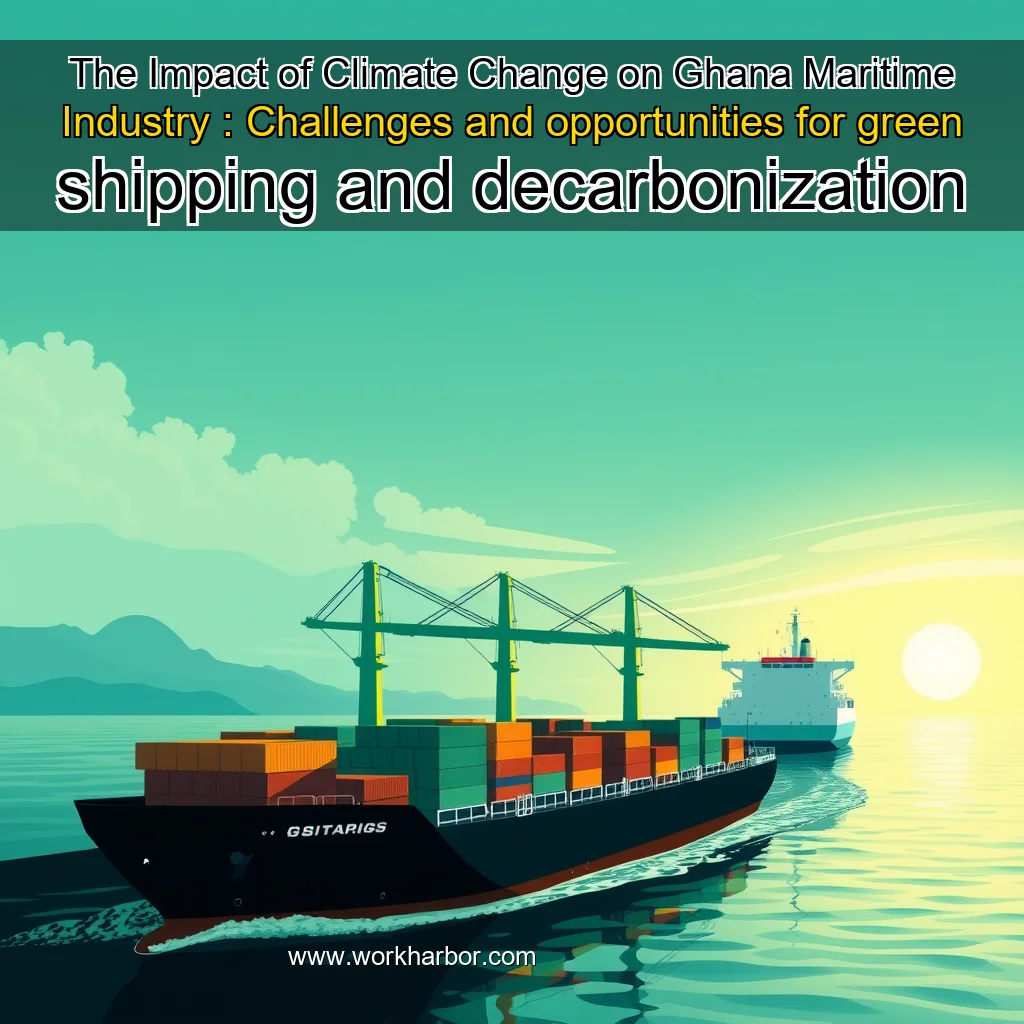
Despite the challenges, Ghana’s maritime industry also presents opportunities for growth and development. The global push for decarbonisation is creating a demand for sustainable shipping practices, and Ghana is well-positioned to capitalize on this trend. The country has a long coastline and a strategic location, making it an ideal hub for green shipping. Ghana has set ambitious targets to reduce its carbon emissions, with a goal of becoming carbon neutral by 2050.
The two reports provide valuable insights into the challenges faced by Ghana’s ports and harbours in the face of climate change.
Understanding the Challenges of Climate Change
Climate change is having a profound impact on Ghana’s coastal infrastructure, including the country’s ports and harbours.
Leading Institution in Marine and Fisheries Sciences in West Africa.
Introduction
The University of Ghana’s Department of Marine and Fisheries Sciences is a leading institution in the field of marine and fisheries sciences in West Africa. Located in Accra, Ghana, the department is dedicated to advancing knowledge and understanding of the marine and fisheries resources of the region. With a strong focus on research, education, and community engagement, the department aims to contribute to the sustainable management of marine and fisheries resources in Ghana and beyond.
Mission and Vision
The department’s mission is to provide high-quality education and research in marine and fisheries sciences, with a focus on addressing the complex challenges facing the region’s marine and fisheries resources. The department’s vision is to be a leading institution in the field of marine and fisheries sciences in West Africa, recognized for its excellence in research, education, and community engagement.
Research Focus
The department’s research focus is on addressing the complex challenges facing the marine and fisheries resources of West Africa.
- Access to Expertise: The UNFCCC and World Bank offer specialized knowledge and technical assistance to help Ghana develop and implement effective climate change mitigation and adaptation strategies. Funding Opportunities: International organizations can provide financial support to help Ghana invest in climate-resilient infrastructure, renewable energy, and sustainable agriculture practices. Knowledge-Sharing: Ghana can benefit from sharing best practices and lessons learned with other countries, enhancing its capacity to address climate change.