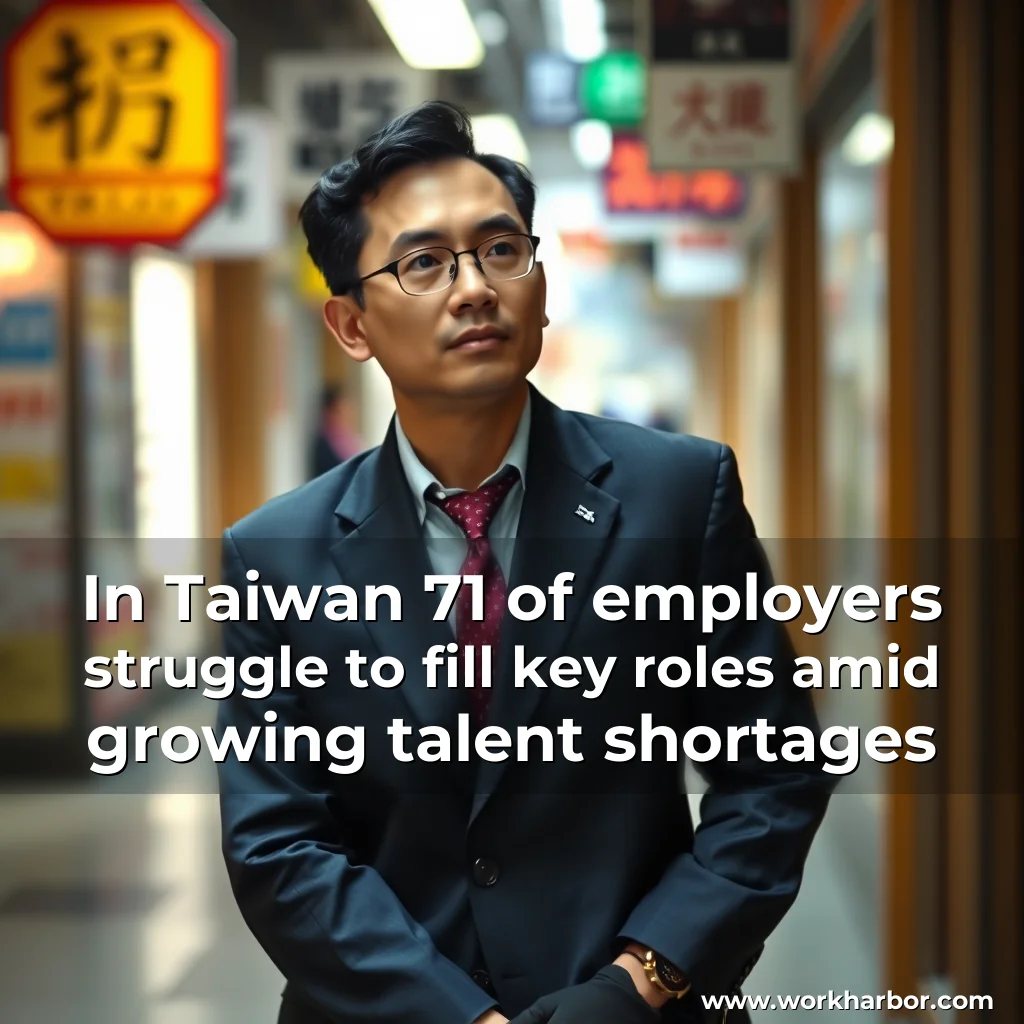
71% of employees feel undervalued and unappreciated. 55% of employees feel that their employer is not doing enough to support their mental health. The talent shortage in Taiwan is a pressing issue that affects various sectors of the economy. The situation is further complicated by the fact that many Taiwanese companies are struggling to compete with foreign competitors, leading to a sense of desperation among local businesses.
The situation is further exacerbated by the fact that many Taiwanese companies are struggling to compete with foreign competitors.
The report highlights the importance of adaptability, digital transformation, and a people-centric approach in the modern workplace.
A People-Centric Approach
A people-centric approach is essential for driving business success. This involves prioritizing the needs and well-being of employees, customers, and stakeholders.
The Importance of Work-Life Balance
In today’s fast-paced and competitive job market, professionals in Taiwan are increasingly seeking a better balance between their work and personal lives. The Robert Walters 2025 Salary Survey reveals that 71% of respondents consider work-life balance to be a key factor when evaluating job opportunities. This growing demand for flexibility and work-life balance is driven by the increasing awareness of the importance of mental and physical well-being. • Key benefits of work-life balance include:
Organisations that prioritise work-life balance are more likely to attract and retain top talent, as employees value the flexibility and autonomy to manage their personal and professional lives effectively.
However, the return-to-office movement has also raised concerns about the impact on employee well-being and productivity.
A career lattice is a network of interconnected career paths that allow employees to move between roles and industries.
The Future of Career Development
As the career lattice model gains popularity, it’s essential to consider how this shift will impact career development.
The Rise of AI in Recruitment
The use of AI in recruitment has been on the rise in Taiwan, with over 40% of businesses already leveraging AI tools like ChatGPT to enhance productivity. This trend is expected to continue, with more companies adopting AI-powered solutions to streamline their recruitment processes.
The benefits of AI in recruitment are numerous, and businesses are starting to realize the value of implementing AI-powered solutions.
Understanding the Future of Work
The report highlights the importance of adapting to the changing nature of work, driven by technological advancements and shifting societal values. The future of work is characterized by increased automation, artificial intelligence, and the gig economy, which will require workers to be adaptable, resilient, and lifelong learners. • The report emphasizes the need for businesses to develop a culture of continuous learning and upskilling, enabling employees to stay relevant in a rapidly changing job market. • Experts predict that the most in-demand skills will be those that are complementary to AI, such as creativity, empathy, and problem-solving.
Further details on this topic will be provided shortly.